Tuesday, 15 March 2016

Pontneddfechan Waterfalls and Climbing

Pontneddfechan is an old mining town on the edge of Brecon Beacons, closest to Neath. An area that has many abandoned mine shafts and old mining equipment laying around, but also happens to have some of the best climbing in the area called Dinas Rock with multiple crags. We travelled up on an afternoon to explore the park and boulder around for a bit.

One of the first waterfalls right in the front of the Dinas Rock, Kennelgarth Wall where we climbed. Can see the steps and concrete blocks from an old mining track that ran along this waterfall.

Grace looking up at a very impressive cave/crag. Apparently people have climbed lines in this. The rock holds are made by water seeping down the rock, so are incredibly small and difficult. Very cool.

Stagnant pool downstream from one of the waterfalls. Very clear water.

One of the main waterfalls right near the entrance to one of the mine shafts. This waterfall and pool are clearly a popular area to swim and cliff jump, with abandoned clothes and paths everywhere.
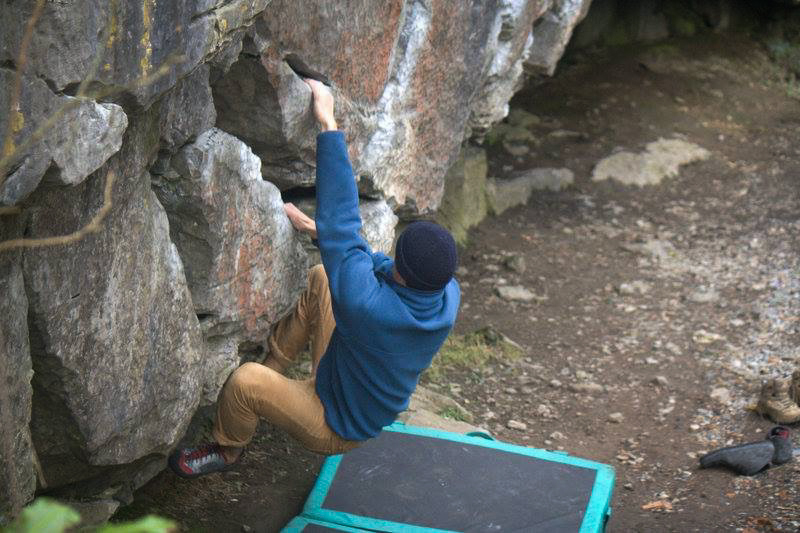
This is me getting crushed by one of the easiest climbs at the Kennelgarth Wall (V1). Since this crag is one of the oldest and most documented in South Wales, the routes are rated super super super hard, and all the rock is smoothed out to be glass smooth from countless climbing shoes wearing them down. Cool experience but horribly difficult.

Time lapse of the Kennelgarth Waterfall.

Rhossili/Worms Head

Rhossili is the further West beach of the Gower and is one of the largest and most expansive stretches of beach along the Gower. It showcases huge tides and has some of the most incredible backgrounds on the Gower. Worm's Head is the island off the tip of Rhossili which can only be accessed via a causeway that is only present 2 hours either side of low tide.

One of the first cliffs along Rhossili looking over the beach at low tide.

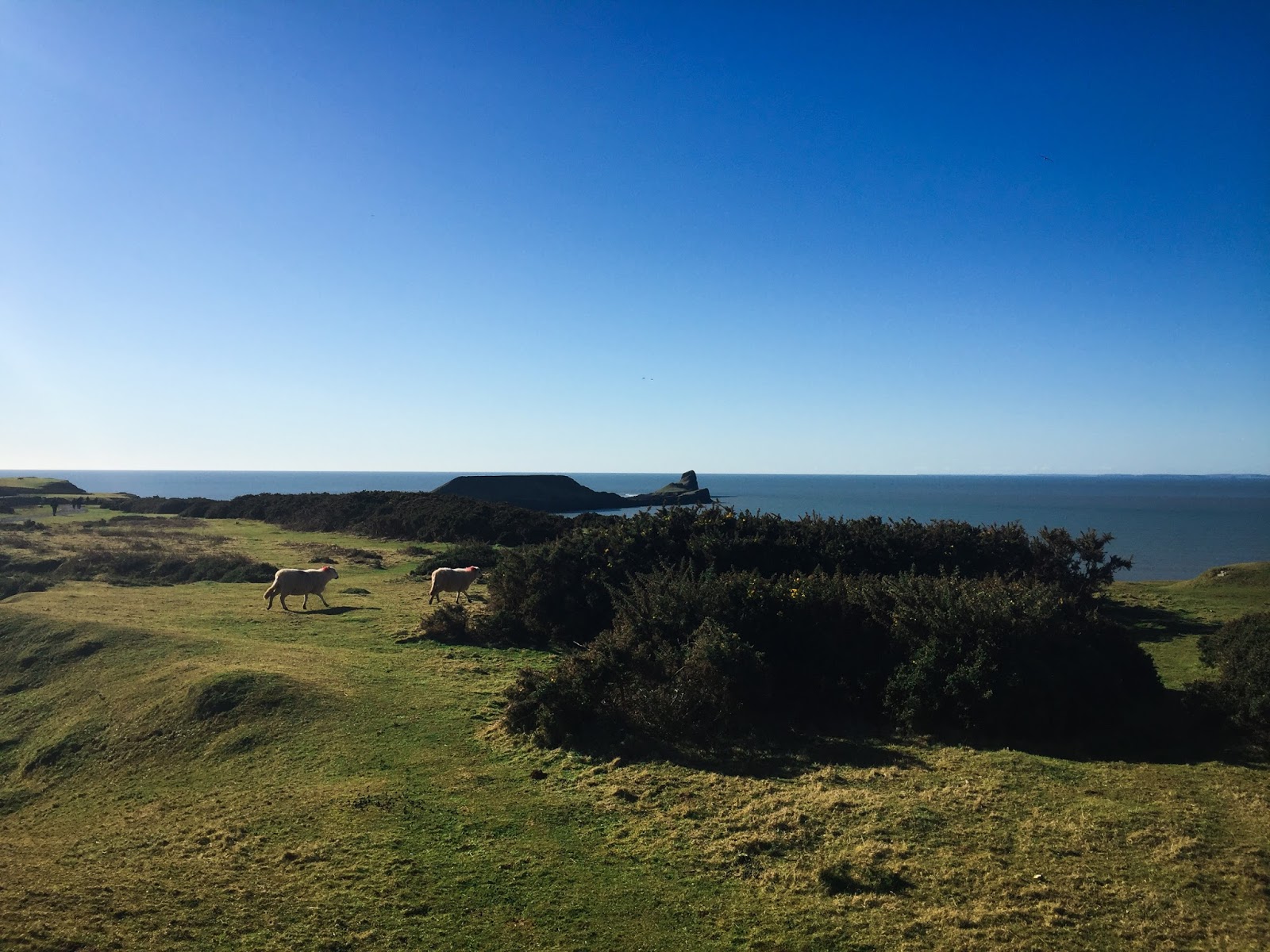
A view of Worm's Head in the background with some of the many free-range sheep in the foreground running to fresher grass.

Looking out to Worm's Head with the exposed causeway in sight.

Looking towards Tears Point further to the East, looking back towards Swansea and out to sea.

Looking from Tears Cliff towards Worm's Head and the causeway about to go underwater. You can see the house to the right where men are stationed 24/7 to keep an eye on the Worm's Head causeway for potential stranded hikers or fisherman.

Standing atop the main cliff at Tears, looking along the Gower coast to the East.

Looking back at some friends standing on Tears Cliff.

The view of Rhossili and Llangenith beach to the South, with the tide moving back in.

Time lapse from Tears Cliff looking along the Gower.

Monday, 22 February 2016

Imogen Hits Wales

On a Monday a few weeks ago, we were hit by winter storm Imogen, which proved to be quite large even for the North Atlantic. 70 mph winds and 15-20 foot waves smacked the coast, bringing lots of rain and tree damage as well. So of course we decided that we should go out to the coast to witness the storm's power. It was very impressive and one of the largest storms I have ever witnessed. The sun alternated between poking out and going completely cloudy, so we got to see a lot of different moods as we walked.


Started at Caswell Bay, where sun was entirely hidden and it was quite misty


But as we went to leave Caswell, the sun began to pop out for our walk along the coast. Tide was very low, but would rush in VERY quickly, faster than we could run. 

Walking along the coast. To give size perspective, headlands are a couple hundred feet tall. Estimating that waves were 15 to 20 feet. Typically waves do not break at all in this area.

Looking back at Caswell and out towards the Three Cliffs area

Sun began to pop out through the mist and pop some color that matched some of the local wildflowers on the tops of the cliffs

Standing out on a headland on top of the cliff, looking over the huge seas when the sun started to shine hard

Watching 20 foot waves break against the giant cliffs. Can see the fine mist all along the coast that was constantly regenerated with each wave.

Moody view from the edge of a low cliff. At about 20 feet up and facing straight into the wind, this location was the windiest.

In the same spot, we were being drenched by the spray from the waves on the rocks. Spray was travelling a good 100+ yards to reach us.

Looking out into the North Atlantic 

More Coastal Storms

Walked out to Mumbles Lighthouse/Point area for the last minor storm and found a place where the waves would force spray straight up. It was fun to stand under it until I got soaked to the bone by one that just washed over the rocks instead of spraying the rocks. Figured I would take a video a bit further back.

Thursday, 11 February 2016

Start of the Gower/Langland Bay

Earlier in the week we took a hike down to the Gower. The Gower is the broad name for the stretch of coastline along Southern Wales, starting just East of Swansea and running all the way to Llangenith. The Gower is known for its dramatic landscape of towering cliffs, sandy bays, and wild surf. There is a path that runs along the duration of the coastline, right on the edge of the cliffs, which offers some spectacular views. We started at the closest bay on he Gower, Langaland, and walked back out towards the Mumbles lighthouse. We got lucky and caught some sun, which led to some great lighting, even for iPhone cameras.

Looking to Langland bay from the smaller Rotherslade Bay.

Looking at the big boulder called the Tor at Rotherslade.

The view from the top of the 15 foot Tor.

Looking back at Langland from the coastal path headed East. Can see some surfers out.

The view from a cliff overlooking the coastline all the way to Langland and Caswell in the distance.

Arrival/Cardiff

Thursday, 4 February 2016

Cardiff Castle

Took a quick visit to Big Pit and to Cardiff to see some sights. Big Pit was one of the most successful mines in all of the UK until its closure in 1980 after being mined of all of its coal. Had the opportunity to take a tour through some of the original mines and learn a bit about life as a miner and some of their systems and ways of life. No pictures as no batteries were allowed near the mine in fear of an explosion from a battery spark!

After Big Pit, we travelled to Cardiff to visit Cardiff Castle, which was properly built in the 11th century to replace a 3rd century Roman fort. This castle has seen repeated conflicts and sieges over the years between the Welsh and Normans, British, and WWII German forces. The entire castle site has been rebuilt by various owners over the years, and there is a fascinating clash of gothic, medieval, and modern architecture across the various buildings. 

The view looking up towards the keep, which was partially demolished and never fully rebuilt

The keep at a distance, surrounded by moat and with views of the ramparts and wall in the background

The Welsh dragon still flies from the keep of the capital city